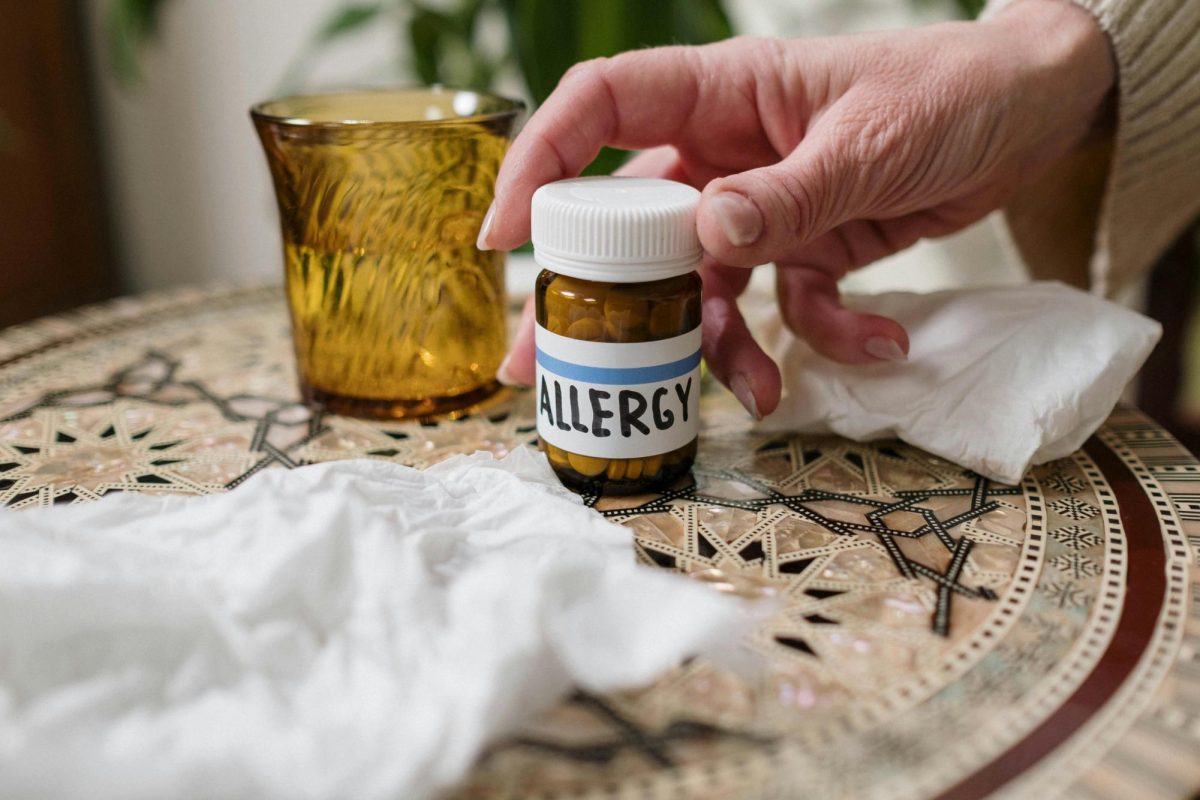
An increasing number of Ellensburg residents have had much worse allergies so far this spring compared to recent years, according to Ryan Galindo, a senior lecturer in the Health Sciences Department.
One community member who has lately experienced allergies was Krislon Rhynes, an office assistant for the English Department.
“Because I’ve only developed allergies within the last five years, I feel like I’m learning about it all at once in my late 20s, whereas a lot of people who have allergies have them from birth,” Rhynes said.
Among CWU faculty and staff, different ideas have come up as to the main causes of these increasing allergies. Rhynes, along with Biology Professor Holly Pinkart and Geography Associate Professor Jennifer Lipton, posited that climate change could be the main factor contributing to the rise in allergies.
“I do believe that the biggest cause is global warming associated with increase in pollen concentration and increased length of pollen season, in general, mostly due to air pollution and greenhouse gasses,” Rhynes said in an email to The Observer. “Having just developed allergies in the last few years, I have been pondering the wide possibilities of reasons for it for a long time.”
Pinkart stated that among the pollen concentrations in the air are yellow flakes coming primarily from the pine trees, cedars and junipers that live in Ellensburg. She further discussed how the weather has been different so far in 2026 compared to previous years, as these changes relate to allergies.
“We’ve had a very different winter season, so it wasn’t as cold and we did have a lot of water, so everybody that needs water to grow is very happy right now,” Pinkart said. “We get a lot of plants that are normally starting to grow and produce pollen later are producing that a little bit earlier.”
“A fair number of plants … are producing more pollen because there was more water and less freezing,” Pinkart continued. “We’ve had a fair amount of wind this spring, so all the pollen that is being produced is being picked up and blown around.”
To measure the rain count, Lipton turned to an online organization called the Phenology Network, which she said is “monitoring research focused on collecting, organizing and delivering phenological data, information and forecasts to support natural resource management and decision making to look at what is called nature’s calendar.”
Phenology Network tracked the status of spring this year by examining lilacs, which are found across the United States. On the Phenology Network website, people could log their observations of how the lifespan and life cycle of lilacs near them have changed over the years.
Despite the increase of rain this particular winter season, Ellensburg and the surrounding area are still facing the effects of a four year long drought, something that Lipton said is contributing to the allergies.
“We have had drier conditions,” Lipton said. “We’re in a drought right now, so the fourth year of a drought. Without the rain, you have more of that pollen in the air, more of it blowing around and it is settling. The rain will capture it and put it into the soil and ground and carry it away and retain it.”
However, Galindo suggested that climate change has not been the direct cause of the increase in allergies this year. He stated that changes in behavior and lifestyle could be the primary factors contributing to a greater frequency of congestion and other allergic reactions and respiratory symptoms among CWU students.
“People oftentimes don’t have the best diets. We don’t have the best exercise routines. We don’t have the best sleep habits,” Galindo said. “We work and operate in very stressful environments and so our stress levels are constantly out of whack. All of these factors can lead to what we call low-grade inflammation all the time.”
Recently, Galindo has heard many people use the word “inflammation” to refer to chronic bits of swelling inside the body caused by an immune response.
“When people are having these low-grade inflammations that are brought on from chronic stress, no sleep, poor diet, poor activity, you can think of all of that as your immune system being agitated,” Galindo said. “Your immune system’s upset. It’s angry.”
Galindo hinted at a longer pollen window as a factor contributing to allergies. Still, he stated that this alone does not provide a strong enough correlation between climate change and allergies to prove causation.
“If I have an angry immune system that’s agitated from all of these lifestyle factors of mine and then you take this agitated immune system and you introduce it to pollen longer, you’re increasing the odds of people developing allergies,” Galindo said. “It’s not climate by itself, but … it plays a factor by widening that window that you can be exposed or you can develop those allergies.”
Health Sciences Associate Professor Ana Freire briefly explained how pollen enters the body and irritates it. “What happens during spring seasons in general is that the spread of pollen from flowers, plants, increases over spring,” Freire said. “That tends to transfer to the respiratory system and the respiratory system treats that pollen as a pathogenic particle.”
“It creates an inflammatory response on the respiratory system and that’s what usually leads to wheezing, sneezing, coughing and those common respiratory symptoms that we have,” Freire continued. “It’s an allergic process that goes through … responding to that pollenization and that increase in our exposure to it.”
To adapt to the increasing amount of pollen in Ellensburg, Lipton advised community members to purchase air filters. She stated that those filters “will help trap some of the larger particulate matter of pollen.”
Lipton specifically suggested “having an air filter that is able to capture that, especially at night, where you’re going to be inhaling and breathing more often and having it closer to where people sleep–that might help them with allergies. So, air filtration is probably one of the better ways that can be done.”