This story is now outdated, for up to date coverage of the ASCWU elections, including the results of the primary elections, click here.
Voting for next academic years, 2026-2027, Associated Students of Central Washington University (ASCWU) officer positions are now open and will close this Friday, May 1. Students can vote for candidates of their choice through the Suitable app after logging in with their student account.
This year’s ASCWU Presidential candidates are Jada Aurellia Chaplin, Rachel Haley and Mars Foster. The Observer presented the three candidates with the same five questions regarding their campaign, inspirations and goals as president. The following are their responses, edited for clarity:
Q: What inspired you to take on this role in ASCWU?
Chaplin: What really inspired me is being here my first year and dealing with a lot of issues, since I’m independent so I really didn’t feel like I had the advocacy that I do now. I made sure I went out into my community, if that’s local or or even ASCWU, to make sure that I can advocate for myself and others, because I understand the struggle of being alone here on campus
Haley: So the first thing is, I have a lot of connections with the student government, and I’ve been able to look at the positions through an outside lens. I’m currently a resident assistant, and I facilitate and help assist freshmen, and the general consensus that I’ve found is that a lot of people don’t know that ASCWU even exists.
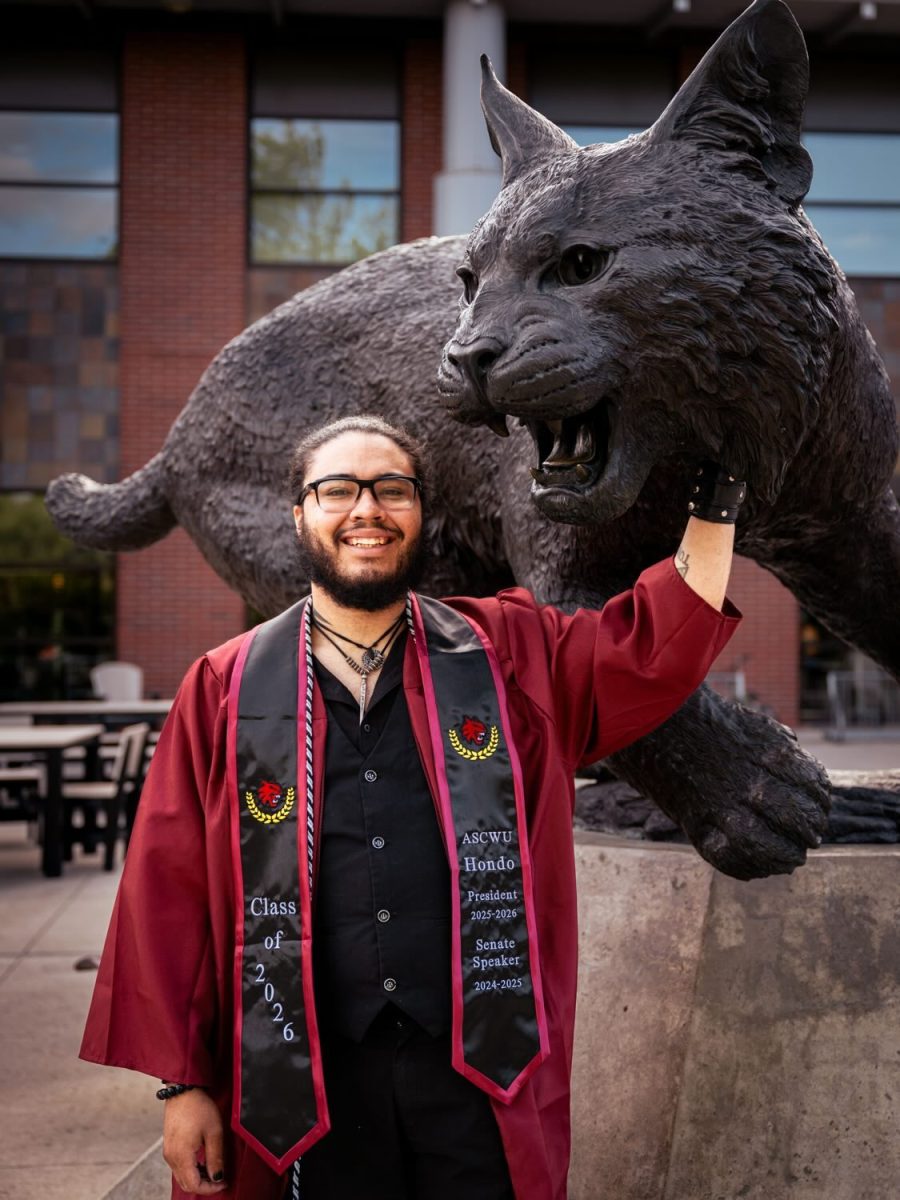
I felt like we needed, since Hondo is stepping down, a body of government that is more focused on educating the people and making sure that they know that they have representatives in the first place.
I’m a public policy major so on my end, this would be a great way to kind of exercise some of my leadership capabilities in a more professional capacity that could help benefit me in the future, but also leave my mark on the campus before I graduate next year.
Foster: So starting back in fall, I had a stalking situation, and due to the amazing efforts of everyone in ASCWU, especially President Hondo, who really helped support me through that. He inspired me to start working on things like writing a bill to change the Title IX process. I found ways on campus that I would love to implement changes to better support students, which is something that I could really do through the President’s role.
Q: What is the main mission of your campaign?
Chaplin: My main mission is to make a healthy, loving campus. I really want to make sure that we have trauma-informed policies, the mental and physical well being and support of administration, student body and all the areas that students need love and support.
Haley: The main thing for me is again, making sure that students know exactly where they can go to find help or talk with officials, letting them know that officials are here in the first place, as well as communicating with students more about things that are going on in campus.
The Observer has covered a lot of things that have happened on campus, and I think your work is very important, but I think the student government should also be taking stances on these kind of issues and communicating with the students; just in case they don’t read the Observer or they don’t know what’s going on on campus, their student government’s keeping them well informed and they know that we have their back.
Foster: I really want to focus on the Title IX process on campus. Like I said, I wrote a bill. We are working to bring it to Congress right now, and I would love to start a Title IX investigation Task Force as someone who’s gone through it. There are definitely some holes in the process that need to be shored up. It is something that has been done before the Title IX Task Force. I have interviewed Dr. Chris about it, I know how to set one up.
I would also like to make ASCWU a peer to peer resource to help PATH. PATH currently has one person and they are leaving at the end of this quarter. They have had the most IRs they’ve had since before COVID, just in fall quarter, so they could really use assistance. I feel like having students there to support other students through those interviews, through those processes, would be really helpful on campus.
I just want to make some fun collaborative events with some on campus offices who may not have the resources to put on some events for themselves, but still really want to connect with students; like our casual clothing closet and our professional clothing closet.
Q: What does it mean to you, to be president of ASCWU?
Chaplin: What it means to me is honestly just being able to be an advocate and support system for my students. I really want to love everyone and pour my heart out into the student body and everywhere else here on campus. Being here for the last two years, I got to see the areas that we need to support, and being present just means that I can be that shoulder that people can cry on. If that’s administrative, professional, even personal; I just really want to be able to be an empowering advocate that loves everyone.
Haley: So for me, the President’s position is definitely one that’s more of a figurehead in a capacity. A lot of people think that the President has a lot of power, but in reality it’s very limited. It’s more of a supporting role than anything. When I picture myself as President, I’m picturing myself helping the Directors and the Senate and the Equity and Services Council (ESC) all kind of coming together and communicating with each other. One of my campaign slogans is bridge the gap, and originally that was for bridging the gap between the student government and the students themselves. Now I’m realizing that there’s communication issues even within the student government branches, and so I would be emailing a lot, meeting a lot, but also making sure that the areas of government feel like they can connect with each other, and then also that the students can connect with those areas
Foster: I think it means just going out there and helping students in whatever way you can. I mean, this past week, I’ve been volunteering every day for Earth Week stuff. Yesterday I was polishing shoes with Grace for the Repair Fair.
I think it just means connecting with students, talking to them, helping them in whatever ways they need. That’s what I’ve been trying to do.
Q: What is an example of leadership that has influenced your leadership style?
Chaplin: Honestly, I think just watching my fellow leaders here at ASCWU, my predecessors, really seeing how they work, especially Hondo, he’s very fiery. I appreciate the passion and the drive and the love that he has, and also Malik, I’ve been able to see both of them, and it showed me that I can do the same thing they did, but hopefully better. I know their flaws and I know their successes, and I see mine too. I want to be able to be successful. I want to be able to be an empowering student leader, just like they were, to make sure that their legacy goes on.
Haley: One thing that I think kind of steered my goal into being into public policy, which is another reason why I’m doing this, was in my high school senior year. I was the student body president of that and we had to deal with a bunch of budget cuts and an administration that didn’t talk to us or didn’t really communicate with their staff or their students.
I had taken the initiative as just a student rep to communicate with that administration and try to bring the community together in those tough times. There I felt like I had that passion and that drive to do that. Now I’ve based my entire career goals around being a leader and fighting for people that have a lot of grievances or are not being treated fairly, and making sure that I can talk with those people that could change that.
Foster: I especially admired the way that Hondo handled the situation with former Director Francis back in fall, that was an incredibly, incredibly difficult time in the office, as anyone who was working there at the time could tell you, but I really admired the way that he had clear vision, clear goals, and just did his best to make sure everyone felt supported and acted as soon as he possibly could.
Q: What aspects of CWU do you aim to uplift during your time as president?
Chaplin: Very honestly, the mental, physical well being is a really big part, because it affects us in and outside of campus if that’s educational or in our personal lives, but also just making sure we have to support where it’s needed, if that’s ESC clubs or trauma enforced policies, like I said, or health and wellness. Just focusing on the areas that directly affect our behavioral and mental well being, because that’s where we can really make that success.
Building those relationships with our administrators, with our admin, the leaders that we have before us, that they’re here to work for us. So making those relationships is where it’s going to be very, very successful. I can make relationships with the student body and be able to be that communicative bridge that gives accessibility, opportunity, empathy and transparency to everything that I do to hold myself and others accountable.
Haley: I’m currently a part of the Equity and Services Council, and I think it’s important for students to know that first, the council exists, as well as the individual groups that are a part of it, such as the Black Student Union, Asian Student Union. I’m a part of EQuAl, I’m the treasurer there, and there is such beauty in diversity. I know that sounds cliche, but it’s very true. I come from a small town, and I didn’t really have a lot of different experiences because we all grew up together, and the fact that we can come here and learn about different cultures and experiences and celebrate it is very important to me.
That goes back to communicating if there are any threats to that celebratory kind of vibe of diversity and inclusion, and making sure that those are addressed and hopefully extinguished in some way. As well as actually being a president that goes to these events such as the Parade of Nations, and ensuring that the student government supports and encourages people to express themselves and be themselves and feel like Central is a safe place to be.
Foster: I think one of the best parts about Central is how many resources we have on campus. You know, we have our casual clothing closet, we have our greenhouse, we have all of these amazing offices, and I think that it’s not a lot of things that people know about. So definitely giving those places a voice on campus and connecting them with students better, so that people understand that we are here for them. There are so many people here who work for the students and would love to connect with them and help them in any way they can.