To celebrate the Multicultural Center’s (MCC) new facility, faculty, staff, students, state legislators and other Kittitas County community members gathered just outside the Zabrina Jenkins Family Welcome Lounge of the MCC on April 10 for a ribbon-cutting ceremony and official tour.
Mal Stewman, the director of the MCC, began the series of ribbon-cutting speeches by recognizing everyone who helped build the facility and form the new organization. “Today is about more than a building. It’s about the people that made this happen,” Stewman said.
Stewman, along with other keynote speakers, thanked all the students who fought hard to see the MCC happen and come together. The students Stewman acknowledged included members of the Associated Students of Central Washington University (ASCWU) and the Equity And Services Council (ESC).
According to the flyers in the foyer just outside the MCC, students across campus wanted to see a prayer room, a dance space and other unique opportunities in the new MCC. Stewman acknowledged the contractors and architects for meeting every request listed on the flyers.
Power of Community
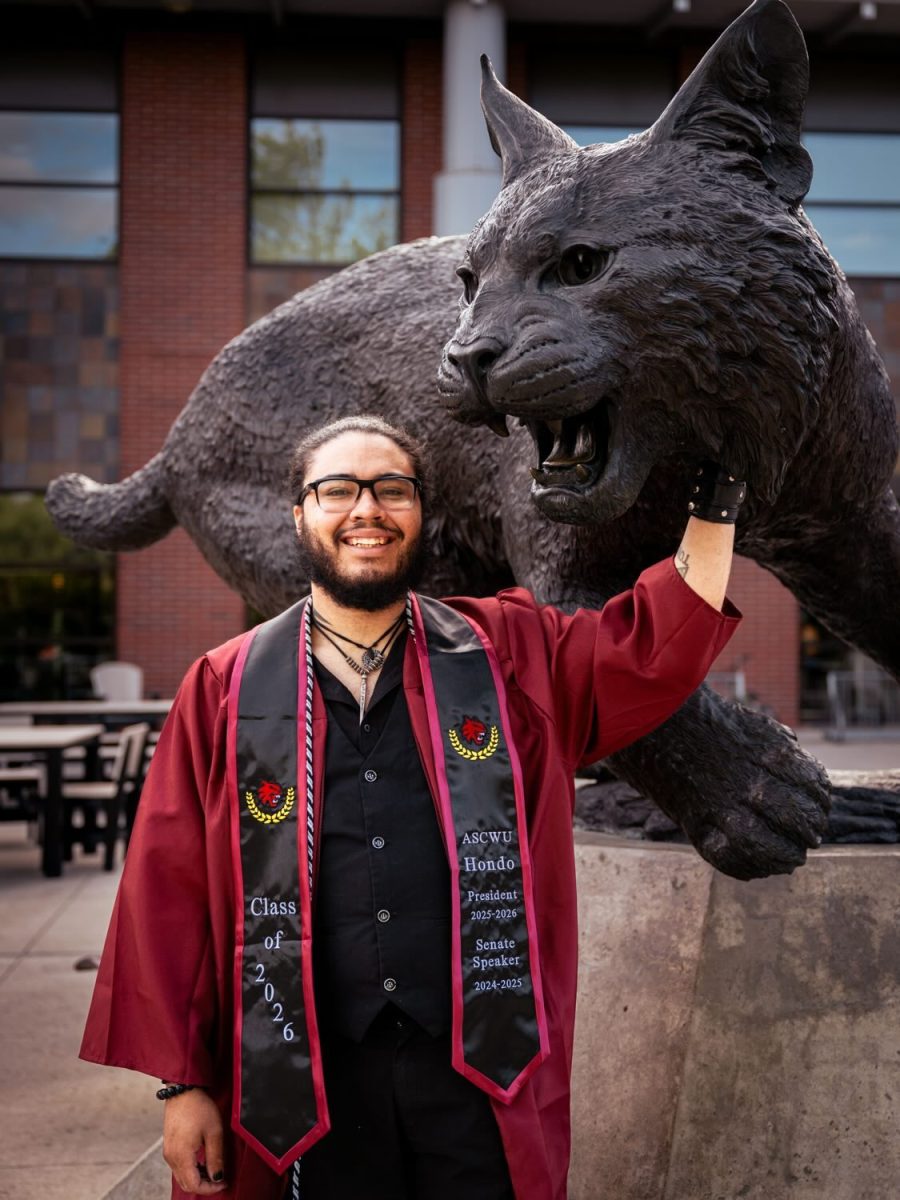
In his speech, ASCWU President Hondo Acosta-Vega described the MCC as “a space that demonstrates the power the community has when it comes together, when others try to suppress the blood in our veins or the lives we celebrate and the songs we sing.”
“The Multicultural Center will stand as a beacon of hope amongst this time of darkness. Never again will our cultures and history be forgotten or lost and I cannot wait to see what our students bring to CWU,” Acosta-Vega continued.
Space For Identity
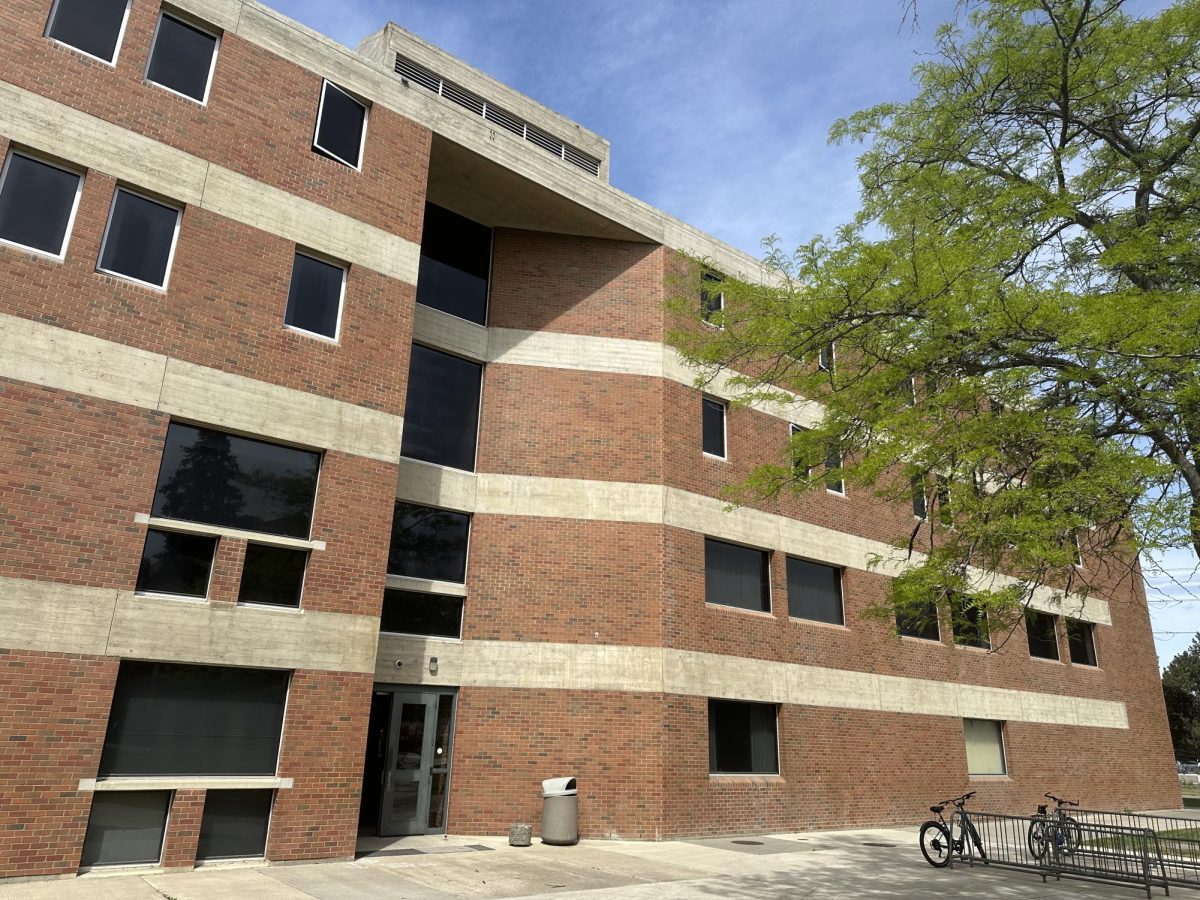
Veronica Gomez, the Vice President for Student Engagement and Success, has worked in the northwestern section of the first floor of Black Hall ever since it was the Center for Diversity and Social Justice. She saw the area evolve to the Diversity and Equity Center and now to the Multicultural Center.
“I spent countless hours here meeting with students, listening to their stories and building community alongside them. For many, especially our multilingual students, they felt they saw the center as a place for them to be able to speak in their native tongue and be able to see themselves reflected in the space,” Gomez said in her speech.
“It was a place where their names were pronounced correctly, where they didn’t have to change their name and make it easier for others. In that, something powerful also happened. This became a place as those before us spoke, a place where students found themselves and where they became even stronger and more confident in versions of who they are,” Gomez continued.

An Evolving Dream
President Jim Wohlpart acknowledged everyone contributing to the evolution of the MCC for staying flexible as their diversity, equity and inclusion (DEI) dreams had to change due to budget concerns.
“[The ASCWU] dreamed that dream and students worked with the administration on a variety of plans that captured those dreams and those hopes and it landed on a standalone building,” Wohlpart said. “Unfortunately, the funding in the state did not allow us the $15 or $20 million that it would have taken to develop a standalone building. So, we got the funding and we started working with the students on a different dream, something new and different.”
“I want to acknowledge that when your dream shifts, it’s hard to give up what you were imagining and take on something and then examine our beliefs, our hopes, the dreams we have created in our hearts and in our imaginations,” Wohlpart continued.
The MCC covers 12,000 square feet, Wohlpart stated. He mentioned that CWU’s Multicultural Center is even larger than that of Western Washington University (WWU), which has 6,000 more students.
“This renovated space, now called the Multicultural Center at Central Washington University, serves our entire student population, providing an opportunity for interactions across race and ethnicity and background in history, languages and literacies,” Wohlpart said.
Gratitude and Legacy
Zabrina Jenkins, a CWU alumna, trustee, longtime donor and the namesake of the MCC’s Welcome Lounge, served as the last keynote speaker of the ceremony.
“My decision to make this gift is rooted in gratitude and legacy. I am here today because of the people who poured into me long before I ever imagined standing at a podium like this. I want to honor my late parents, who were early supporters of the CWU Foundation,” Jenkins said. “They believe deeply in the power of higher education and in the responsibility to lift others as you climb their example of generosity, service and benevolence. They shaped my life and made this gift possible.”
Impact on Students
After Jenkins finished speaking, the students who contributed to establishing the MCC cut a ribbon to honor their completed mission. During the tour of the new facility, several MCC student employees and other Wildcats expressed gratitude for the successes the MCC has had so far.
For example, Special Education major Synthia Gomez, who already regularly uses the MCC as a resource, said, “I think it’s doing well at representing multiple cultures, not just one or two. There’s multiple and everybody’s represented.”
Other students highlighted specific resources and activities within the MCC space. For instance, Bianca Gil De Lamadrid, the MCC Social Media Coordinator, majoring in Law and Justice, said, “One of the main things I think they’re doing great right now is with our dance room. I’m part of the Folklorico myself and I think having that space here, especially in the Multicultural Center, is one of the greatest things.”
Some students also encouraged the MCC to continue to make minor improvements so that the organization can become even more effective and meaningful.
For instance, being of Indigenous descent himself, Sociology major Aaron Whiteman said he encourages the MCC to add a student organization specifically for those of American Indian heritage.
“I think it would take a student organization,” Whiteman said. “It’s definitely growing and how they could do it is really supporting a spot for tribal or Indigenous students.”
Public Policy student Rachel Haley stated that the MCC could improve its publicity by “sending out more announcements or recognition with different months, such as different heritage months, women’s history, things like that.”
“They’ve already done a good job, but I think making sure they stay on top of every kind of recognition day or month up there that’s happening,” Haley continued. “Posting on social media or sending out a quick email would make a difference in having students feel more recognized.”