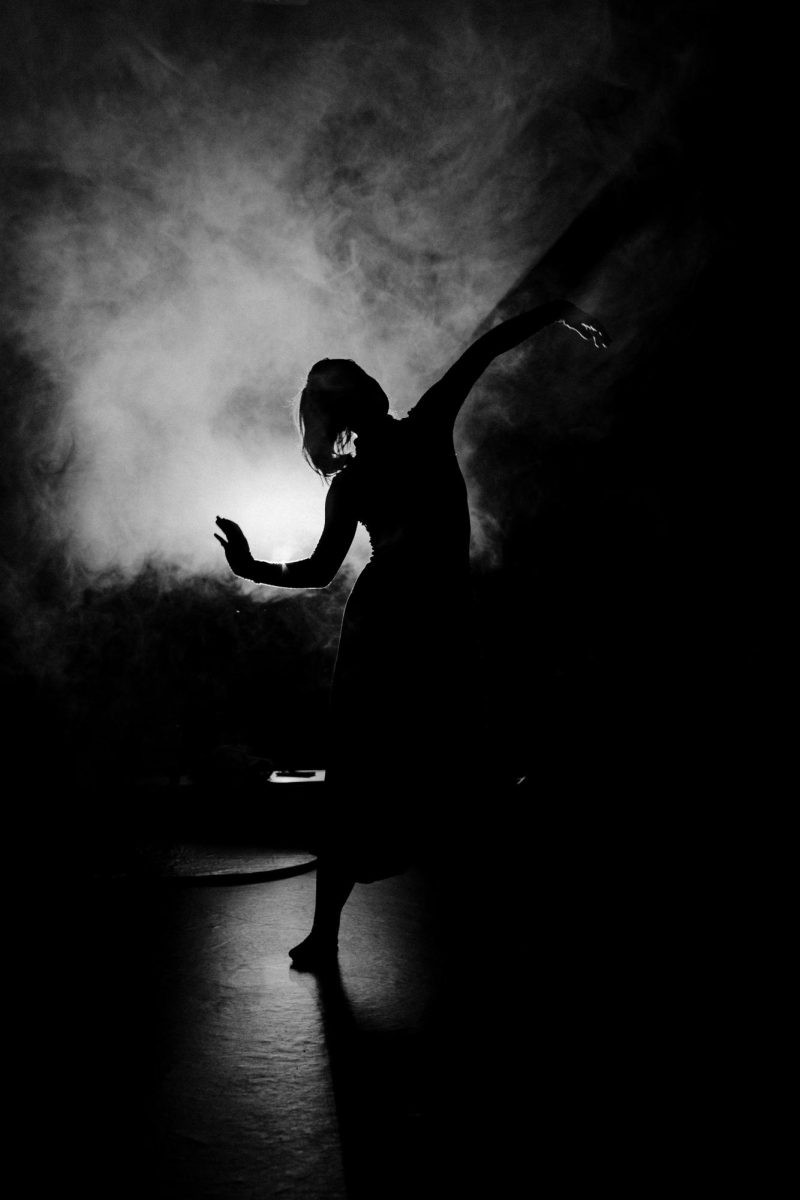
CWU Music Ensemble’s latest opera, “Cinderella” by Jules Massenet, followed an 1899 retelling of the classic 1697 Charles Perrault fairy tale. The show took place in CWU’s Hertz Concert Hall during the second weekend of April, with four performances between April 9 and 12.
The principal cast was doubled-up, meaning that audiences attending the April 9 and 11 performances would see the “odd” cast, while those attending the April 10 and 12 performances would see the “even” cast.
Professor of Voice and Opera Gayla Blaisdell shared her vision as the opera’s director. “We want the audience to enjoy this fairytale,” Blaisdell said. “We are all familiar with the story, so we aren’t trying to re-write the content, but we want the audience to enjoy the comfort and warmth of this re-telling of the story, like re-watching your favorite childhood movie or reading your favorite book over and over and over again.”
Massenet’s “Cinderella” featured an additional challenge for the orchestra and vocalists to tackle: it was originally written in French (titled “Cendrillon”), but the CWU Music Ensemble performed it in English.
“Since we are singing in English, the rhythms are sometimes tricky in this opera because the translation from the original is sometimes a little awkward. We’ve changed some lyrics to help, but some moments are just difficult to count and be together with the orchestra because of the complexity of the musical material and the need for text and diction,” Blaisdell said.
However, this level of challenge was intentional on Blaisdell’s part, as she said she knew she had a class of highly skilled students up to the task.
“As a professor, I balance the curricular needs of the students and the capability and level of the students that we currently have in the program,” Blaisdell said. “We have not done something from the Grand Opera tradition as our full production before since I got here in 2008, so this was a great opportunity for our students to learn the style and demands of this repertoire. We also have a very talented and hard-working core of vocal students right now who were up to the vocal and musical challenge this opera presented.”
The cast performed without microphones, but this was no issue within McIntyre Hall’s Hertz Concert Hall. The vocalists and orchestra alike utilized the room’s acoustics to their advantage, allowing their music to carry easily, even when performing behind or next to the audience, such as The Fairy Godmother’s, portrayed by Caitlyn Leners or Morgan Lenz, numerous entrances from the back of the concert hall.
“Cinderella” featured multiple memorable moments that electrified the audience in one way or another. Any time Cinderella’s wicked stepmother (Anna Grushevskiy/Kyra Ross) and spoiled stepsisters (Miranda Wojciechowicz/Alex Chandler and Ashley Both/Kristina Svistunov) were onstage, they’d bring the audience to applause and laughter with their physical comedy.
The same applied to occasional members of the ensemble, such as one lady of the kingdom (played by Arlette Villalobos), letting out a relieved “phew” when Cinderella’s iconic glass slipper did not fit her. The first time Cinderella (Violet Madson/Camille Brennan) revealed her blue ball gown and glittering tiara, members of the audience murmured in awe. Vocalists from opposite casts were even spotted in the audience, supporting their fellow artists on their nights off.
The operatic music enhanced the already familiar tale in ways that would not be possible in similar art media, according to the cast and crew. As Blaisdell put it, “Because this opera was written in the late 1800s and was written for the commercial opera theaters of Paris, the music of the opera is accessible. Still complex at times, but accessible. Some moments have an almost cinematic, film-score feeling to them, while it also has moments of gorgeous, lyrical melodies.”
Unlike standard musicals, operas often use their librettos not only to accompany the action onstage but also to inform it. “Cinderella” was no different. There were times when the orchestra, conducted by Director of Orchestras Nikolas Caoile, had its own moments to shine, setting the tone of a scene or allowing audiences to better understand a character’s feelings through the underscore alone.
The show concluded with its happy ending, as did the weekend of performances. The audience gave standing ovations and the vocalists sent the audience off by singing the words, “That’s all, thanks for coming, goodnight!”
NOTE: Due to how double-cast shows work, there is a chance that audience members saw a different cast than staff at The Observer did. When discussing characters played by two people, both actors’ names were included, with the “odd” cast member listed first and the “even” cast member second.