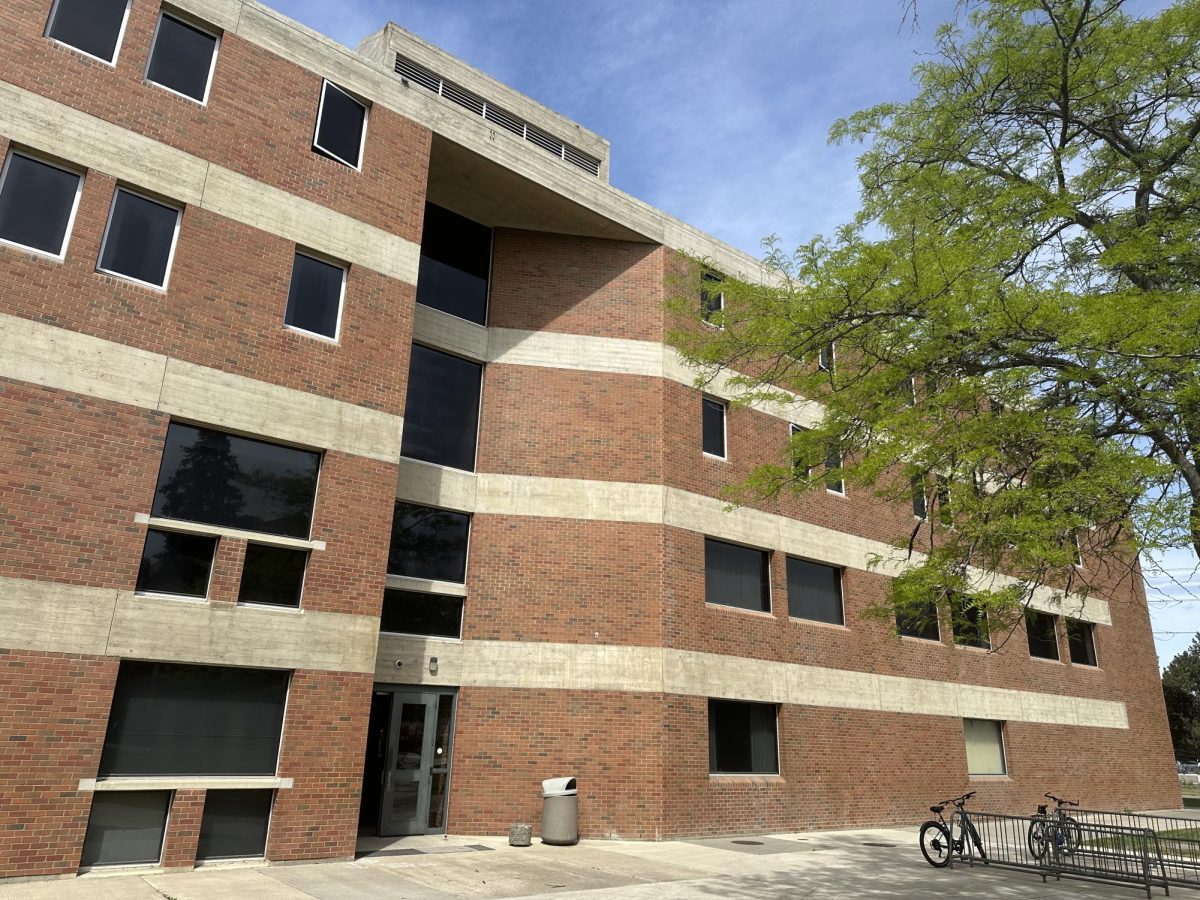

Around 200 Faculty Senate members and faculty gathered in the Mary Grupe Center and on Zoom on Feb. 4 to approve the holding of a vote of no confidence against President Jim Wohlpart after citing grievances with erosion of shared governance, transparency and trust. In a vote of 44 yays, two nays, and two abstentions, the Faculty Senate agreed to move forward with an anonymous online faculty vote of no confidence through the next two weeks, the results of which will be shared with the university by Feb. 25 at the latest. The Faculty Senate is composed of 51 faculty members who help represent the different departments around CWU.
Faculty have stated that even if the vote of no confidence passes, it does not end Wohlpart’s tenure as President. “The BOT could decide to terminate his employment based on the vote, but they are not obliged to,” Faculty Senator and Senior Lecturer in English Ruthi Erdman explained via email. “An alternate scenario is that a ‘no confidence’ vote could serve as a wake-up call, opening doors to negotiation and processes of true shared governance, with Wohlpart still as our president.”
A Jan. 20 petition was signed by 49 faculty members who called on the Faculty Senate Executive Committee (FSEC) to hold a Vote of No Confidence on Wohlpart. The petition alleged a series of actions from the president to consolidate power and a failure to elevate shared governance.
CWU Administration and the Board of Trustees, in a joint statement, told The Observer that they “acknowledge the concerns brought forth by the Faculty Senate.”
“We remain committed to working with our campus community through our established shared governance and administrative processes,” the statement continued. The email acknowledged the rejection of a potential delay in the vote and expressed belief that collaborating is still the path forward. “The Board [of Trustees] and the CWU administration believe disagreement and healthy discussion can lead to productive outcomes, and we would appreciate the continued engagement of faculty as we work toward our shared goal of supporting student success.”
Shared governance, as described by the Office of the President, is “the system in which various groups participate in the decision-making processes at Central Washington University (CWU).” The shared governance document was originally approved in 1988 but the most recent version, overseen by Wohlpart, was approved on May 16, 2025, by the Board of Trustees (BOT) and outlines the authority, responsibilities, and commitments of all constituencies of the document, including the Faculty Senate, United Faculty of Central (UFC), and The Academic Department Chairs Organization (ADCO).
In a presentation during the Faculty Senate meeting on Feb. 4, Department of Anthropology and Museum Studies Associate Professor Hope Amason and Department of Sociology Professor Griff Tester presented three strategies that Wohlpart has used that have allegedly impeded shared governance.
Centralized Authority
At the meeting, Amason summarized the petition’s claim that there has been a creation of structures by Wohlpart that bypass the basic principles of shared governance to “centralize authority.”
“Whether the topic is scheduling or advising, faculty is not meaningfully consulted with,” Amason added.
Amason also detailed the claim that when Wohlpart was asked by the Senate’s Executive Committee what needed to be revised in the Faculty Code, he expressed he wanted to get rid of the president evaluation. Erdman said the announcement came as a shock to many in the Senate.
“It looks to me like a step in the wrong direction,” Erdman commented via email. “Accountability at all levels is absolutely crucial to shared governance and democratic processes.”
Executive Committee Chair and Associate Professor of Theatre Arts Natashia Lindsey explained in an interview that the evaluation is more feedback for the president rather than a true evaluation, though the president has been trying to get rid of the faculty feedback system. “We don’t have the authority to evaluate the president, only the Board of Trustees,” Lindsey told The Observer. “We, at least on the executive committee, have known for a while that President Wohlpart doesn’t like the faculty version of those [evaluations] and really wants the Board of Trustees to be the ones that solely evaluate him.”
Weakening Participation
The petitioners at the Feb. 4 meeting argued that Wohlpart and his administration have consistently been separating themselves from the Faculty Senate along with weakening its position. In the fall of 2025, Wohlpart announced to the Senate that he would no longer be attending the monthly Faculty Senate meetings to go on the road more, raising more money from the legislature. Following recent actions from Wohlpart, however, some senators stated that they began to doubt that rationale.
Along with Wohlpart’s decision to step away from Faculty Senate meetings, Amason mentioned the sacrifices the Faculty Senate has had to make in the name of collective scarcity. Amason brought up the fact that the Faculty Senate has gone without a full-time administrative assistant for two years and has given administration control of faculty-centered spaces on campus.
“Faculty Senate has made sacrifices,” Amason said. “But a representative body cannot withstand further cuts to its resources and remain a healthy shared governance partner.”
According to Amason, Wohlpart and the BOT have plans that more cuts will come, resulting in a smaller Faculty Senate with fewer standing committees, taking more power from the Faculty Senate.
Performative Consultation
Amason and the petitioners said they lost confidence in Wohlpart’s ability to successfully run the university due to the lack of transparency with faculty about the shared governance document’s role at CWU and the way it was produced outside of the shared governance process.
In order to create the new shared governance article, faculty were appointed to a group. That group would meet over the course of a few years to discuss the new article and to create an understanding. According to Amason, when faculty were allowed to ask Wohlpart questions on Jan. 23 he “failed in communicating with faculty who were appointed to the shared governance working group.”
“He never mentioned to [the faculty] his intention of the shared governance document to supersede faculty code,” Amason said.
An email sent by Wohlpart to the Faculty Senate’s Executive Committee one day before the vote requested they delay the vote, citing a piece about mediation in the Faculty Code as the main reasoning, with Wohlpart stating he believed in productive mediation.
According to the Faculty Code, “Methods of conflict resolution reasonably available … should have been exhausted before bringing a motion for a vote of no confidence to the Senate.”
Lindsey explained in an interview that the piece in the Faculty Code that mentions mediations offers mediation as an example, not as a necessity. “There are multiple ways of which you can try to work through these issues,” Lindsey said. “The petitioners, the 49 who signed the document, felt like they had already done everything that they could … The Executive Committee reviewed what they wrote, and based on our experiences too, agreed.”
Amason addressed Wohlpart’s letter during an interview, stating, “There was a whole week to raise that concern. Where was that? … That’s part of what I’m pointing out here is that it’s a timing issue.”
In his official email response to all faculty on Feb. 10, Wohlpart stated that “as I only received the petition from Faculty Senate two days before the Senate vote, I have not been given the opportunity to respond to its contents or been consulted on its accuracy.”
Another senator, History Professor Marilyn Levine, shared a similar sentiment to Amason, at the meeting, stating, “I will say, the faculties are the heart of the campus, and unfortunately, we have a president who doesn’t even want to be this. It is three years too late. We should not allow reasonable trepidation and a not so subtle attempt at intimidation to depress from doing the right thing.”
Separately, Senator and English Professor Anne Cubilie said she was “appalled” at lack of communication by administration regarding the neo-Nazi posters found around campus in early February. “I was appalled I didn’t know about this until I found The Observer article last Thursday,” Cubilie said. “I was equally appalled that the administration, outside from noting no crime has occurred, had no comment on the issue.”
Student Government Response
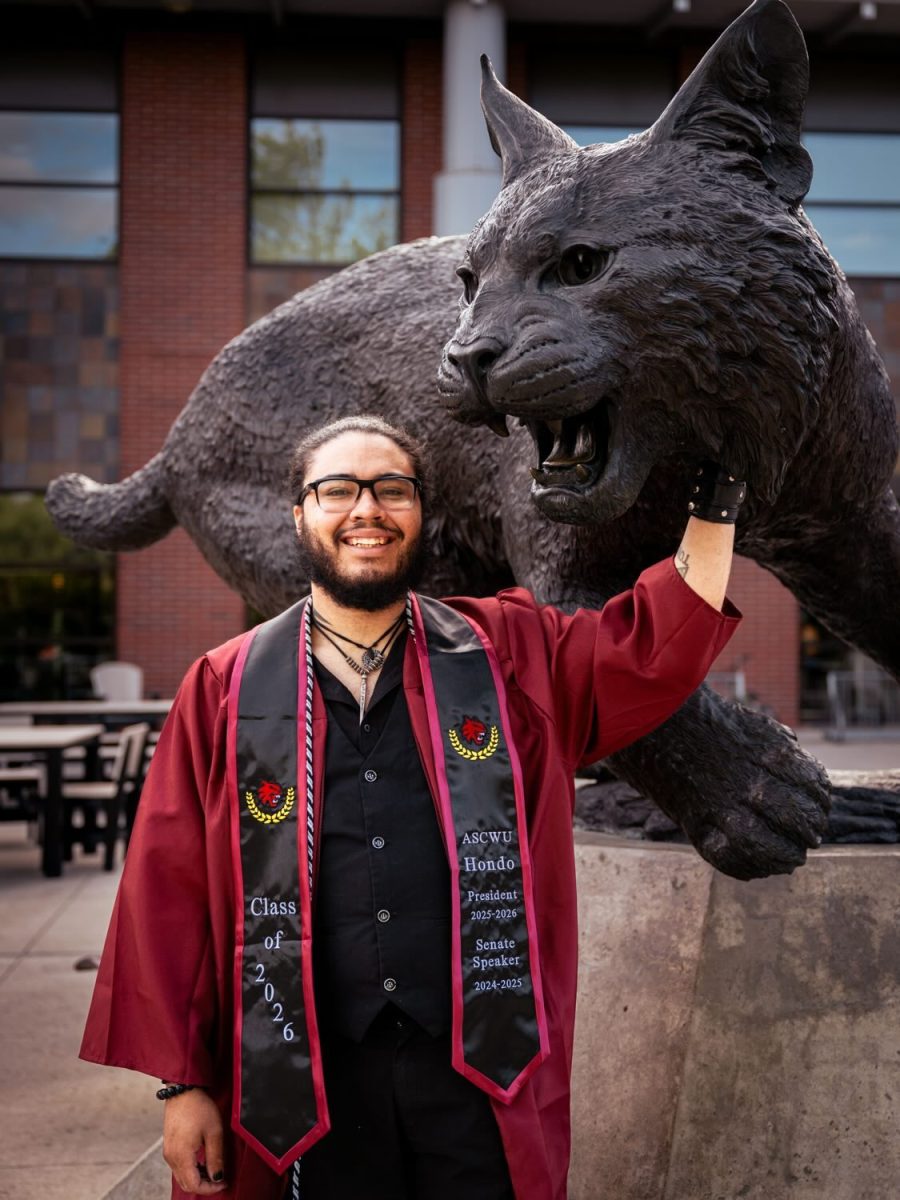
ASCWU Student Body President Hondo Acosta-Vega appeared at the Senate meeting to represent ASCWU in lieu of Student Senate Speaker Aylin Parrazol Bravo. During his statement, Acosta-Vega made it clear that the student government body will be staying out of the conflict between the university president and the Faculty Senate.
“We would not want the Faculty Senate to tell us how to do our jobs, and we don’t want to tell you how to do your jobs,” Acosta-Vega said. “And so ASCWU will not be taking a side in this, nor making any kind of statement on the matter other than a complete state of neutrality.”
Amason and Erdman both expressed positive positions on ASCWU’s decision, with Erdman stating that the decision is “a good move” and Amason claiming they’re “doing the right thing.”
Wohlpart’s Response
Wohlpart sent out an email to all CWU faculty this past Tuesday afternoon, detailing his response to the various allegations shared in the faculty petition and by the FSEC.
In the email, Wohlpart stated that he had not been given a chance to comment on the contents of the petition, and that the petition, as he reported, contained various inaccuracies. “Please note that I could have responded to the petition when the Faculty Senate received it on Jan. 20 if it had been shared with me at that time,” the response stated. “Even though it was rejected by the Faculty Senate Executive Committee, this offer [mediation] remains open, as my focus has always been, and continues to be, on listening and building bridges.”
He further dedicated the second half of his email response to pointing out “inaccuracies” in the faculty petition, writing, “I suggest that much of the information that you have received is inaccurate or incomplete, including the many unverified and unsubstantiated claims in the petition.”
Finally, he closed the email with his official response on the vote of no confidence, and its potential impacts on the university. “A vote like this does great damage to a university. Likely effects include a further decline in enrollment, loss of reputation in the state with legislators and state agencies, a negative impact on our comprehensive campaign and, most importantly, damage to our students and their success,” he stated.
“The damage cannot be unwound and will impact the future of the university for many years to come. Our nation is currently driven by a politics of fear, misinformation, and division. We should reject this kind of discourse in our university community and come together with open minds and open hearts, curious about how we can evolve our work to put students first,” his email continued. “I believe we can do better than that [spreading misinformation]. Our future depends on it.”
Desire for Real Dialogue
Erdman noted, “I haven’t talked to anyone who dislikes President Wohlpart personally. No one I know thinks he’s a bad person.”
Amason agreed with this sentiment. “I believe every person deserves another chance,” Amason said. “I don’t want to speak for 49 people. Myself, I like President Wohlpart as a person … I know that there are people who say they cannot trust President Wohlpart anymore. I’m not one of those people, but I believe people can change.”
However, Amason still showed hesitation on whether Wohlpart could come to the table for a real dialogue. “I don’t know [the outcome of all this],” Amason said in an interview. “I don’t feel like I really know him. The person I thought I knew when he first came, it’s just not the person who he has become, at least in the eyes of faculty … I don’t know who he is anymore.”
Lindsey shared her thoughts on the outcome of the vote and if Wohlpart could sway the votes of the petitioners. “I don’t think so,” Lindsey said. “That doesn’t mean we can’t try and continue on with mediation. We can try mediation, even as the vote is happening. We still have that option.”
Lindsey continued, “I hope that the outcome is that we can figure out, as a university community, how to come together, how to come together and move forward so that we can keep together, and students can keep learning, creating.”
Erdman commented on the potential vote results, “Whichever way the vote comes out, many of us hope that the outcome will be a renewed commitment by the president and the BOT to engage in real dialogue with the faculty and show a genuine respect for the shared governance processes we already have in place.”