

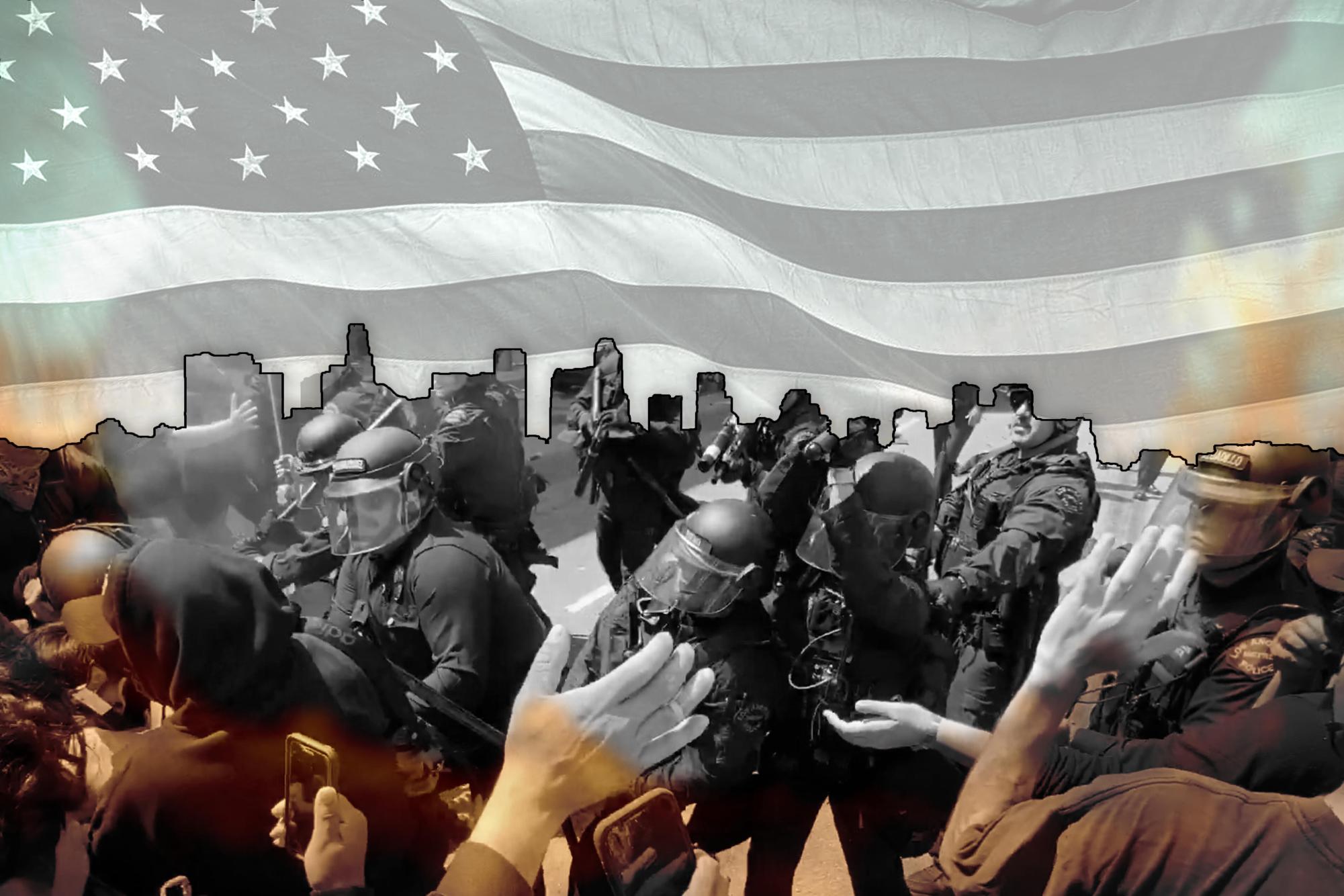
The California National Guard descended on Los Angeles county this past Saturday for the first time since the Rodney King riots in 1992. This development came on the second day of what became a three day series of protests across LA and the greater California area.
President Trump deployed the national guard to quell who he said were “insurrectionists;” a term which many are speculating could be used to further broaden his already historic use of his executive powers.
The state of California is now suing Trump for his “infringement” of California Governor Gavin Newsom’s authority over the California National Guard. The lawsuit also states that the deployment of the California National Guard was “unlawful” and “unprecedented.”
In response to Newsoms outward disapproval of his actions Trump has said that he “would” support arresting Newsom for his actions. Newsom has commented on the threat, publicly “daring” anyone to come and arrest him for his actions.
Friday, Saturday and Sunday: What happened
On Friday, Immigrations and Customs Enforcement (ICE) conducted major raids across the city of Los Angeles, but were notably blocked and met with protest following an attempted raid near the fashion district of downtown LA.
In response, dozens of federal agents arrived and attempted to disperse the protestors, who had blocked two white vans from exiting the area. That afternoon, hundreds of protestors gathered to demand an end to ICE raids across the city.
The protestors were subsequently shot with pepper balls by federal agents before the Los Angeles Police Department (LAPD) could show up to disperse the crowd. More than 100 citizens were arrested that day.
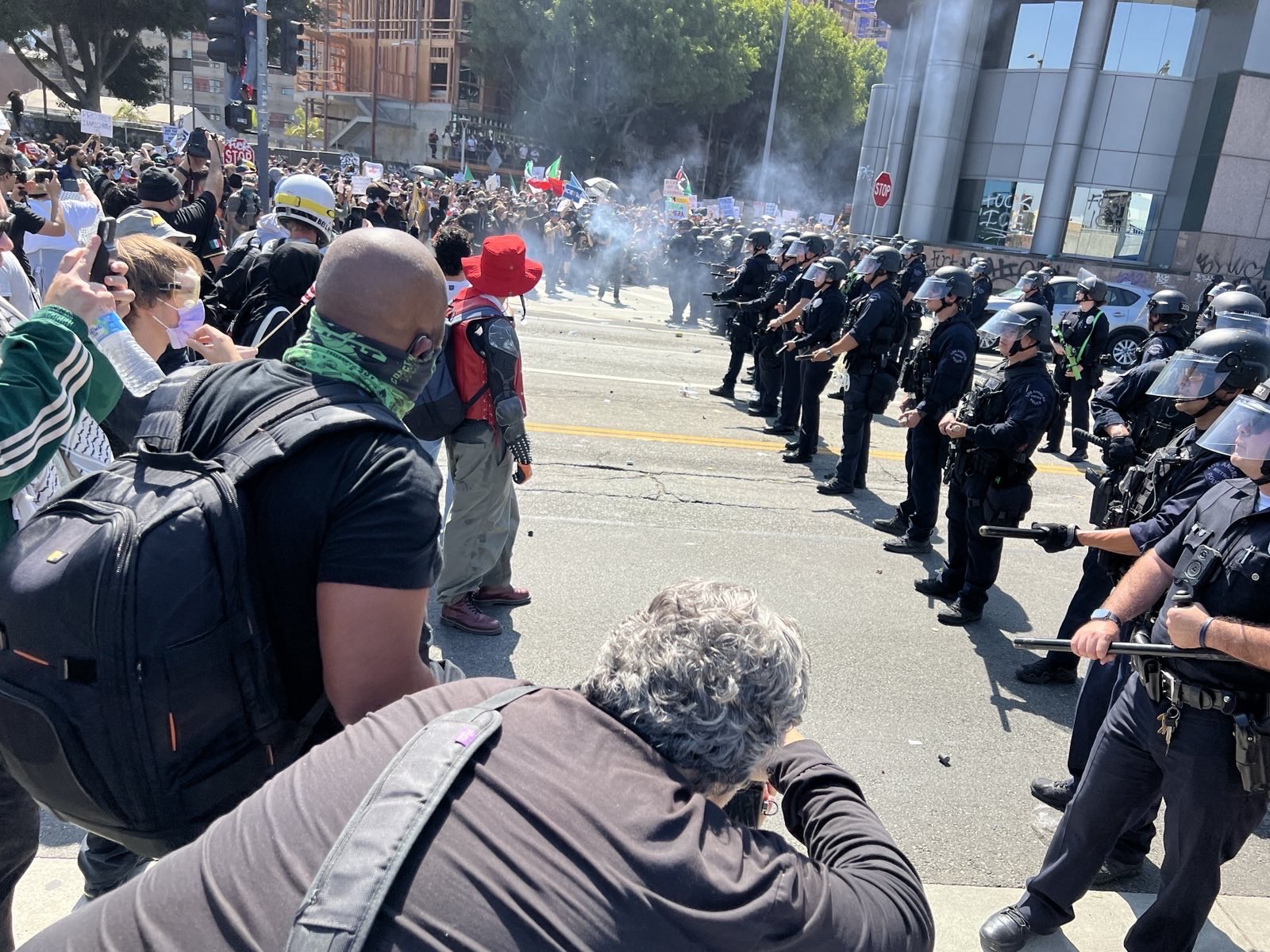
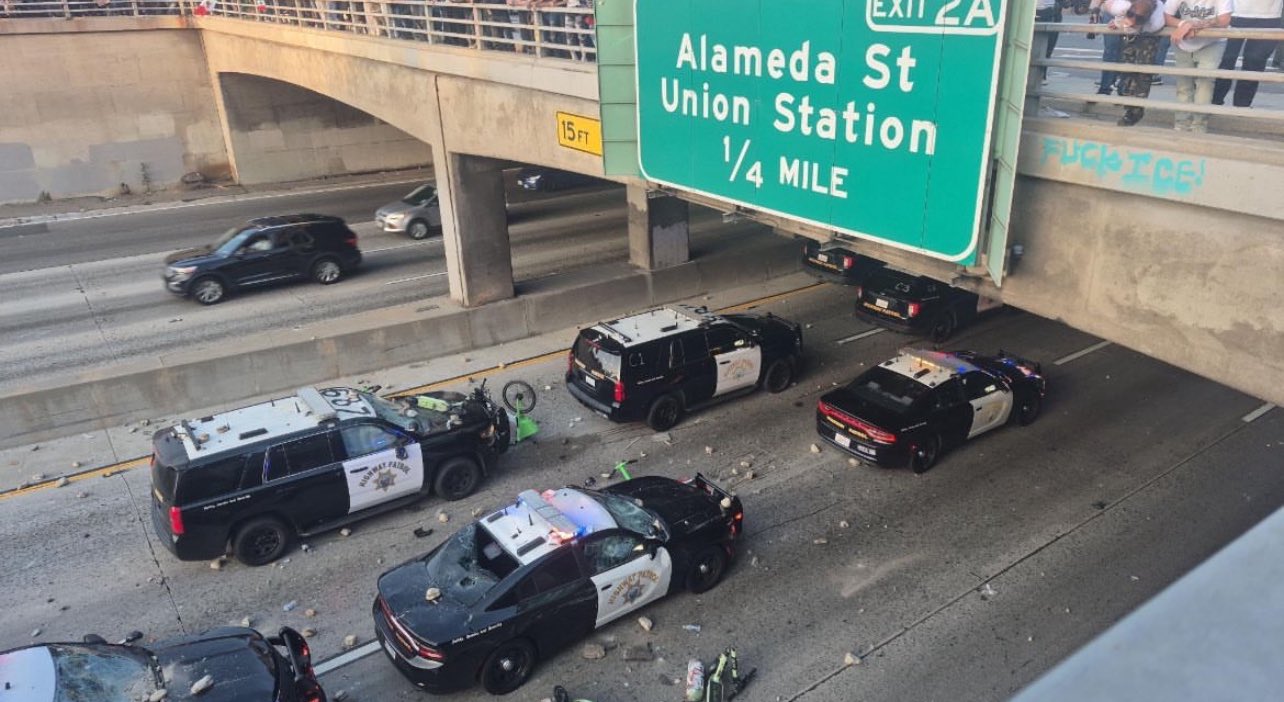
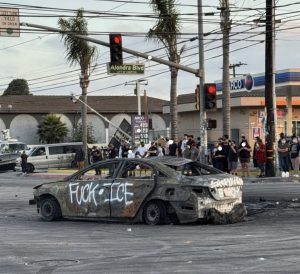
The next day protests erupted across the city, with the largest conflicts taking place in Paramount, a city located in the southern part of Los Angeles county. There, in the early morning, protestors and law enforcement clashed, with protestors damaging police vehicles and police deploying tear gas on the protestors.
-
Photo courtesy of People’s City Council – Los Angeles on X
-
Photo courtesy of People’s City Council – Los Angeles on X
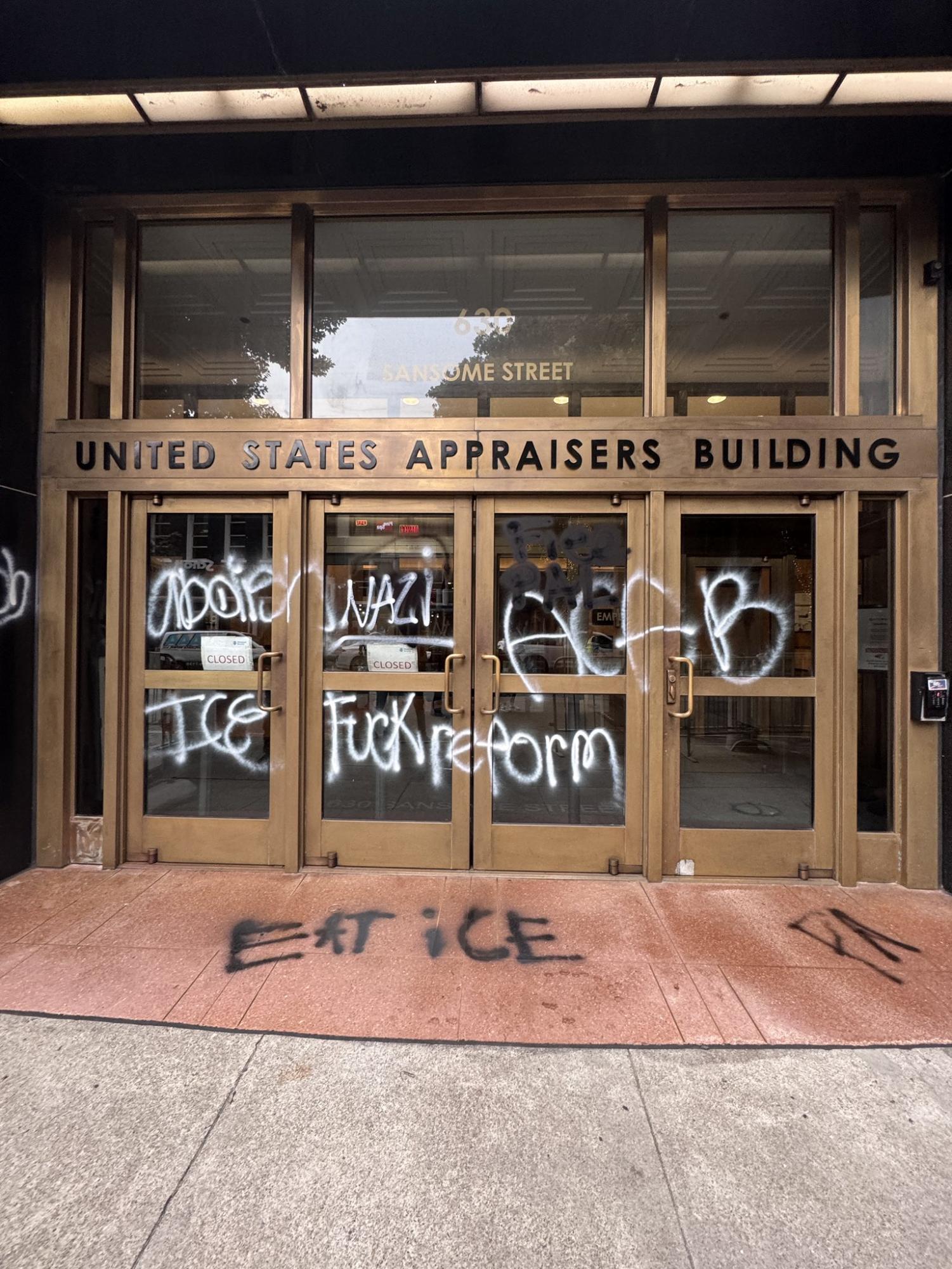
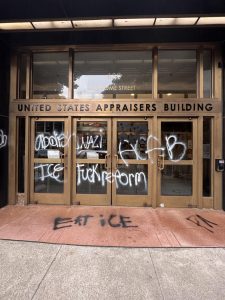
Throughout the day tensions continued to rise with more citizens taking to the streets to protest in what was quickly becoming one of the largest anti-ICE protests in history. That afternoon the LA police declared all of downtown LA an “unlawful assembly” and threatened to detain anyone in the area.
Following the escalation, Trump signed a memo which ordered the deployment of 2,000 National Guard members to protect ICE’s activities in the area. This memo was signed in opposition of both Newsom and Los Angeles Mayor Karen Bass’s objections to the idea.
That night the protests escalated further, with officers now using flash-bangs and rubber bullets to disperse the protestors, primarily in Compton and areas along the LA River.
Sunday was, at the time of this story’s publication, the latest and largest day of protest, and it was heavily centered around the Metropolitan Detention Center, further north in Los Angeles County. Throughout the day protestors were detained, beaten, shot with pepper balls, tear gassed, flash-banged and trampled with horses. An Australian reporter, Lauren Tomasi, who was covering the news was shot with a rubber bullet during her broadcast. Another reporter, Ryanne Mena, claimed that they had also been shot during their coverage, taking to X to post, “Homeland Security agents shot me and other journalists with pepper ball bullets yesterday in Los Angeles.”
In the afternoon protestors blocked off parts of the 101 highway, which spans from the top of Washington to Southern California, causing major rerouting in both public transit and bus schedules. By Sunday night, the bulk of the protesters had dispersed, and at the time of this article’s latest update there have been no further protests.
Trump’s powers, precedent and legal limits
Since his inauguration President Trump has been making history, notably through his extensive use of his executive powers. Now, many outlets are speculating his administration could be attempting to invoke the Insurrection Act of 1807. The New York Times reported that, “Invoking the act would give Mr. Trump broad authority to use the United States military to deal with violent protests in California and possibly elsewhere.”
Regardless of his next move, Trump’s control over the California National Guard set a new, and possibly illegal, precedent on his authority over state governors. With the National Guard acting as both state and federal enforcers, it’s rare to see a president deploy them against the wishes of a state’s own Governor. However, Trump was able to achieve this through a loophole which allowed him to “federalize” the national guard, giving him authority over Newsom through Title 10 authority.
The lawsuit that was filed against Trump will play a pivotal role in determining the limitations, or lack thereof, for future presidential actions made by Trump. The wording in the law that he used to assume the power needed to deploy the National Guard isn’t explicitly clear, meaning that whatever is ruled in regards to this suit will set a new precedent for his ability to do so again in the future.
-
Photo courtesy of People’s City Council – Los Angeles on X
-
Photo courtesy of People’s City Council – Los Angeles on X

In 1992, George H.W. Bush used the Insurrection Act to send the California National Guard to respond to the riots that took place in LA following the documented beating of Rodney King. However, he had the support of Pete Wilson, California’s then-governor, and did not invoke the federalization laws that Trump used to assume power.
Trump’s suggestion to arrest Newsom has also left many worried about the precedent his decisions could set. Former House Speaker Nancy Pelosi, in a shared social media post, stated “The Trump Administration’s escalation and provocation in California inflames tensions and incites violence. Now, the President of the United States said he would arrest a sitting American governor just for disagreeing with these actions. This is a hallmark of authoritarianism.”
Newsom used similar wording to describe Trump’s actions, stating in a social media post that, “He [Trump] is creating fear and terror to take over a state militia and violate the U.S. constitution. The illegal order he signed could allow him to send the military into ANY STATE HE WISHES.”
This story features live coverage, which will be updated as the situation develops.

Robert • Jun 9, 2025 at 4:27 pm
I have had it with these democrats and people including Soros and NGO’s that pay these agitators to riot. Stop using rubber bullets, light them up, they are destroying our country. I promise you they won’t be missed.